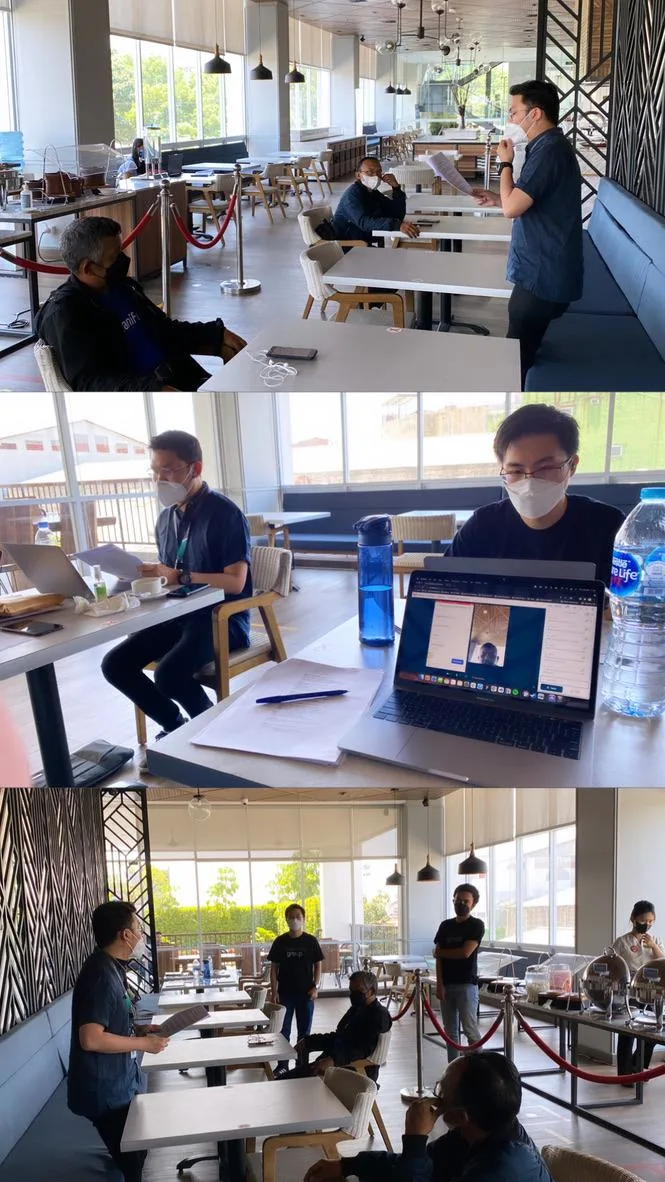
Case study 03 · TaniFund · ID · WhatsApp API · Farmer platform
The field validation that stopped a 3-month development waste
TaniFund was a P2P lending platform connecting retail lenders to smallholder farmers across Indonesia.
- Role
- Product Design Lead, leading 3 product designers, 1 UX researcher, 1 visual designer, and 1 UX writer
- Platform
- Website and WhatsApp API flow
- Scope
- Research, Stakeholder management, End-to-end design implementation
- Result
- Avoided ~3 months of building an untested concept. 3 of the first 10 new projects came through WhatsApp
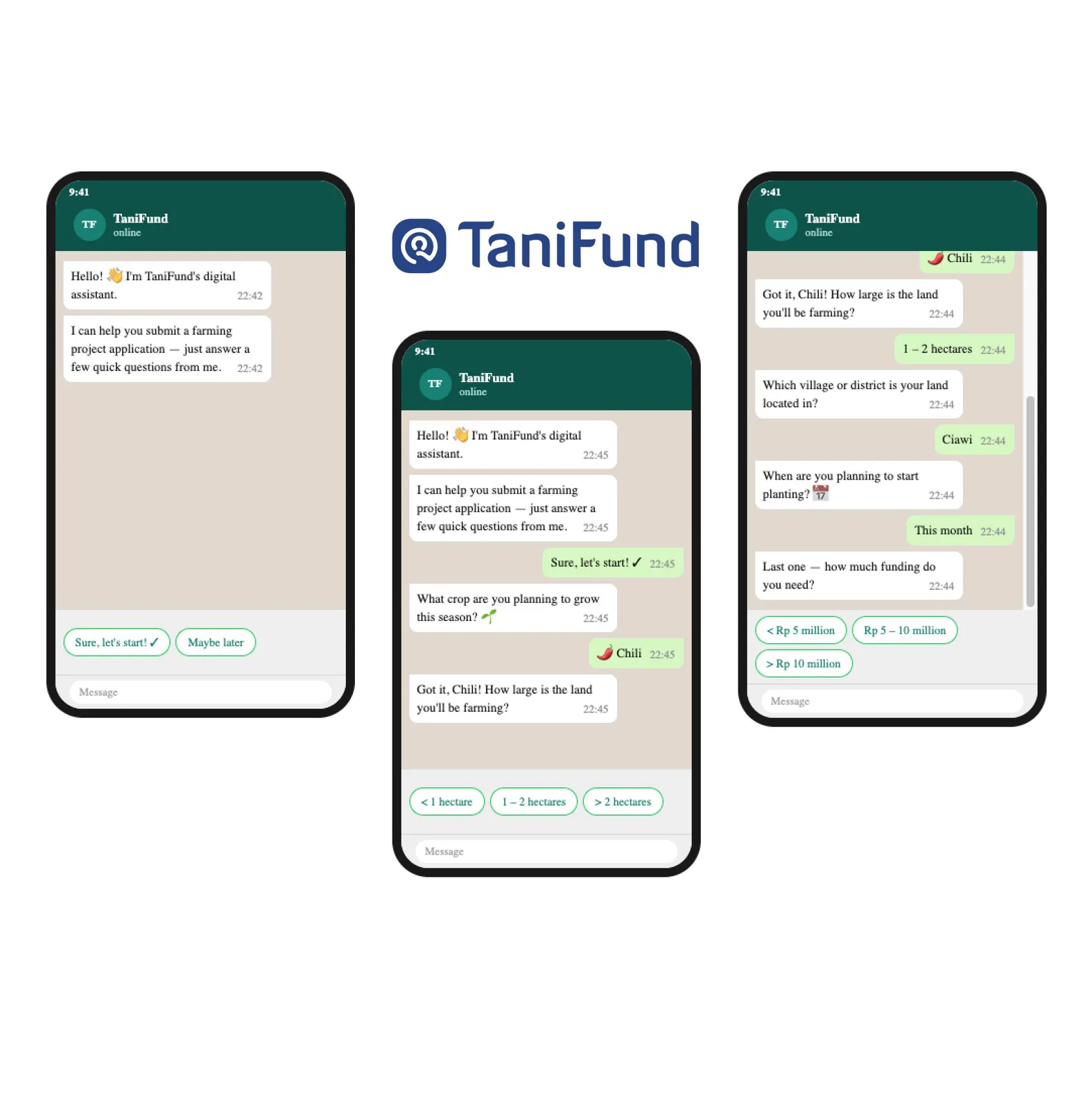
Context
When the best design decision was not to build
This case study is about one specific decision: how the product team caught a costly misdirection before it became a 3-month build, validated the real problem directly in the field, and shipped a solution farmers actually adopted.
Problem discovery
The business team wanted to spend three months building a product for users who would never use it
The business team sent a direct request to the product team: build a platform where farmers could independently submit all the project data required to apply for a loan.
My team, together with the PMs, pushed back because the ask was too risky.
Research plan
We proposed a field test before committing to anything
The plan
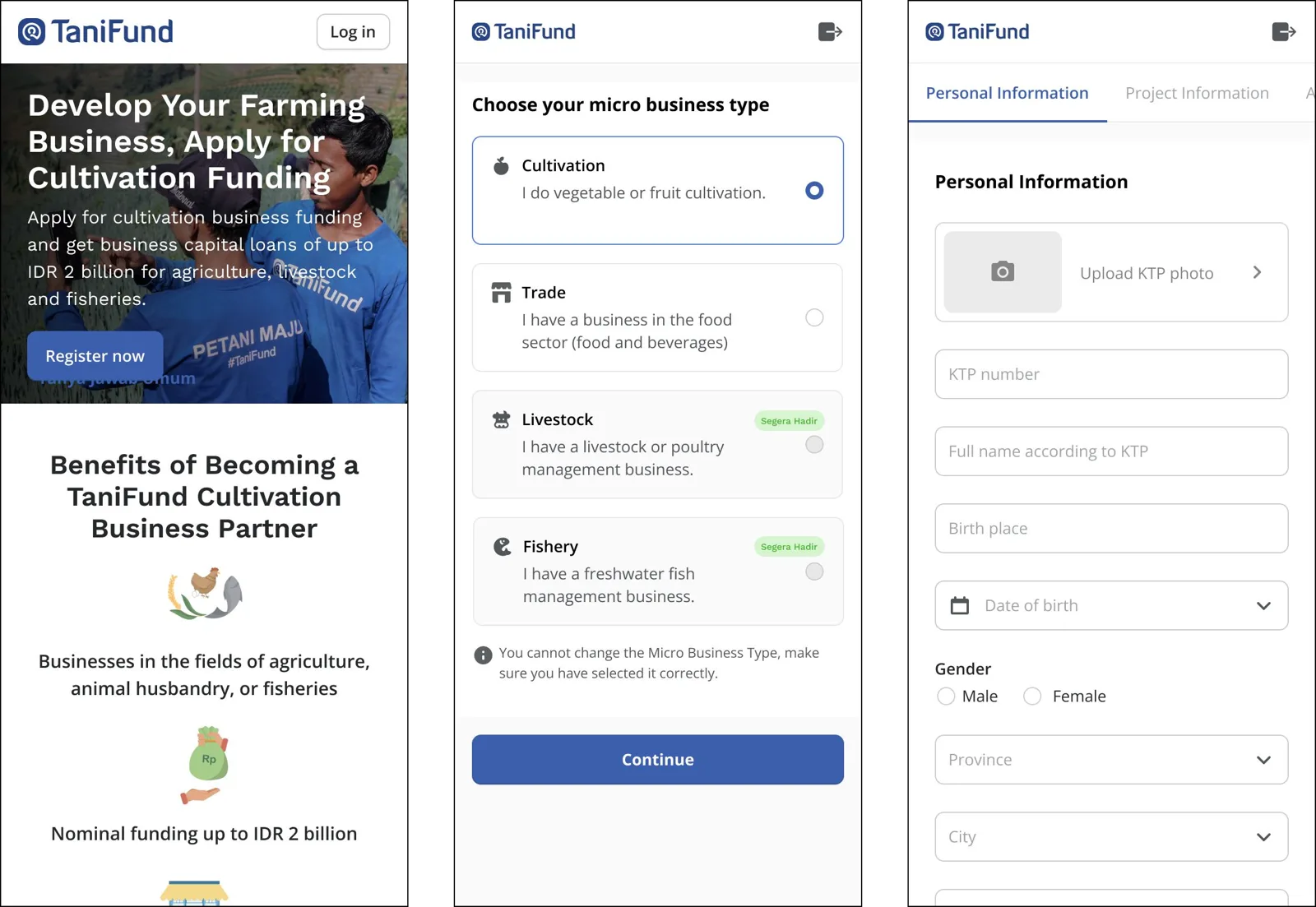
- Build a proof of concept
- Take it directly to farmers
- Let the field findings determine the direction
Our initial assumptions
- Farmers have low digital literacy and low-end Android phones
- Field agents do all the project submission with the farmers’ help
Research methods
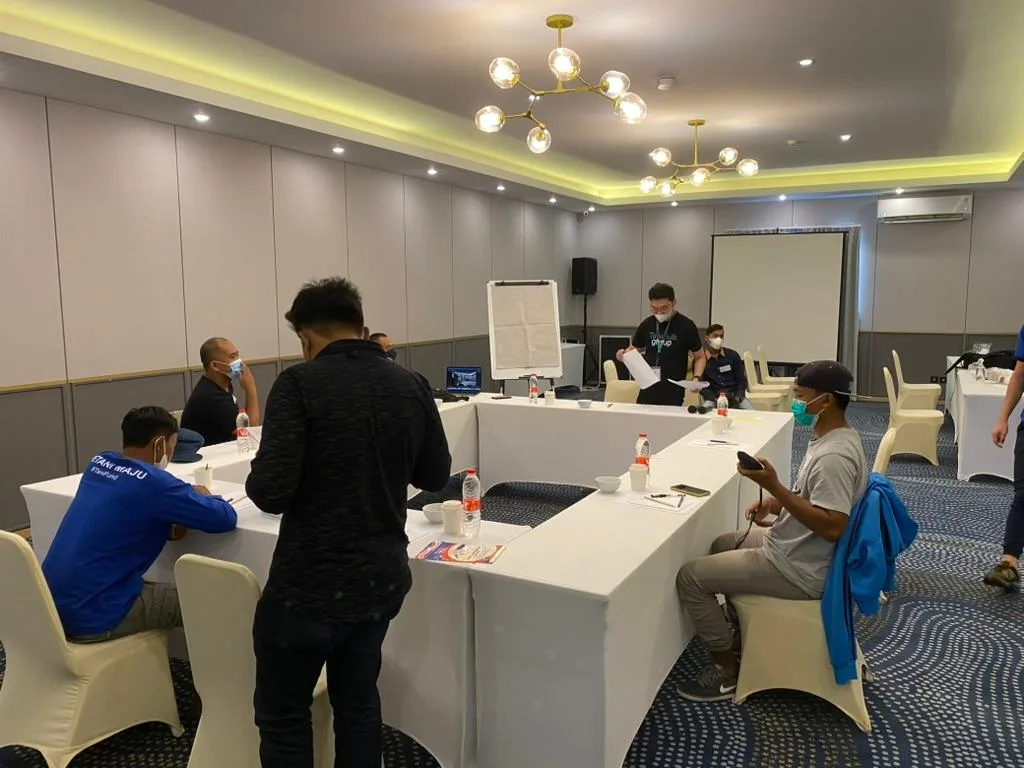
- FGD to get a sense of general sentiment toward using digital products
- Usability testing with the proof of concept to capture user behavior while filling in long forms on their phones
Research result
Farmers were already submitting project data through WhatsApp. We just had to optimize the flow.
Instead of building a new platform, we decided to build around WhatsApp, which users were already familiar with.
WhatsApp is their primary tool
Every farmer named WhatsApp as their primary work tool, including for helping field agents complete project applications. The behavior we needed existed in a channel we hadn’t designed for.
Storage is a hard limit
Multiple farmers said outright they were hesitant to add another app. Low-storage devices were common in their community.
The form felt invisible
Submitting through a web form felt “not done.” Unlike WhatsApp, there was no visible “proof” and no field-agent response. Farmers still needed a feedback loop.
The decision · Two days in the field, three months saved
Estimated ~3 months of build
FGD + usability test with a proof of concept
- Another thing to install and store
- No visible proof of submission
- Channel farmers already use daily
- Instant reply as feedback loop
Final solution
A WhatsApp chatbot that lets farmers submit projects in the channel they already use, with minimal field agent involvement
Using the decision-tree flows available in the WhatsApp Business API in 2020, we built a lightweight structured intake:
- The field agent sends the chatbot flow to the farmer via WhatsApp
- The farmer submits project details by responding to a guided sequence of prompts
- Responses are automatically compiled into a spreadsheet, ready for the field agent to process in bulk
The farmer never leaves WhatsApp · Reenactment
Field agent's sheet
Rows compile automatically. Illustrative data.
| Farmer | Crop | Land | Village | Start | Funding |
|---|---|---|---|---|---|
| +62 8xx 0417 | Shallot | < 1 ha | Brebes | Next month | < Rp 5 mn |
| +62 8xx 2290 | Corn | > 2 ha | Garut | This month | > Rp 10 mn |
| +62 8xx 1042 |
of the first 10 new projects came through WhatsApp after release.
Result